
Property managers running rentals along Highway 81 or in the Eagle’s Landing area know the pattern. A tenant calls in about water pooling near the garage. You drive out, and the gutters are overflowing, pushing water against the foundation. By the time you’re standing there looking at the problem, it’s been going on for weeks.
Seamless gutters don’t fail all at once. They fail slowly. A sag here, a clog there, a mounting point pulling loose near a downspout. For rental owners managing two, five, or fifteen properties across McDonough and Henry County, that gradual failure goes unnoticed until it turns into a repair bill.
That’s the core problem this post addresses. As a McDonough roofing company with 12 years serving Butts, Henry, Spalding, and Lamar counties, we work with property managers who want a systematic way to understand what their gutter systems are actually doing and when to act before the damage compounds.
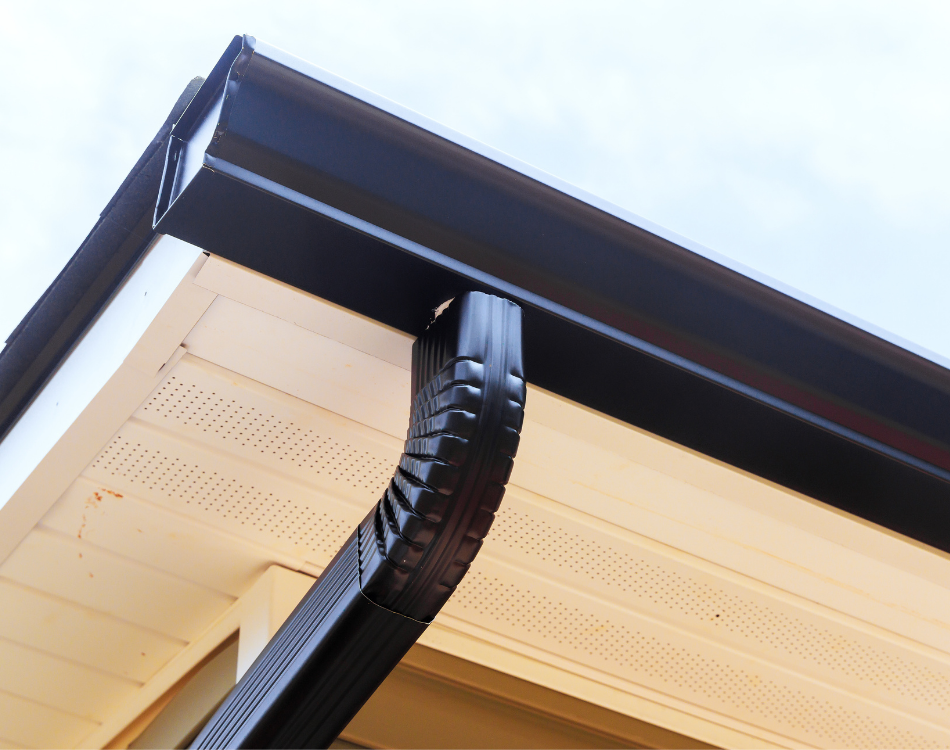
What’s Actually Happening Inside a Gutter System
Gutters exist to redirect water away from the structure. On a standard McDonough GA home, particularly the 2000s and 2010s subdivisions near Jonesboro Road or the older properties closer to the Square, the gutter system is a continuous channel that captures runoff from every square foot of roof surface and routes it down through downspouts, away from the foundation and crawlspace.
When that system works, it works invisibly. When it fails, the effects show up in ways that look like other problems: soft spots in the fascia board behind the gutter, peeling paint along the soffit, water stains on exterior siding, efflorescence on brick, and wet spots on garage floors or basement walls. Rental tenants rarely connect these symptoms to gutters. They call about the wet floor. You end up spending on the symptom rather than the cause, and the underlying drainage failure keeps going.
According to FEMA’s residential hazard mitigation resources, improperly managed roof drainage is a leading contributor to moisture damage in residential structures. For property managers, that context matters. A failing gutter is not just a cosmetic issue. It’s a building envelope failure with real structural and liability consequences downstream.
Seamless gutters eliminate the sectional seams that most older systems have at every joint. Those joints are where clogs start and where leaks develop first. A seamless system runs as one continuous piece, formed on-site to the exact dimensions of the roofline. Fewer points of failure means the system lasts longer and requires less reactive maintenance between inspections. That’s a meaningful difference when you’re trying to reduce maintenance calls across a rental portfolio.
How Gutter Systems Fail Differently on Rental Properties
The difference between a gutter system on an owner-occupied home and one on a rental property isn’t structural. It’s behavioral. Owner-occupants walk past their gutters every day and notice when something is sagging or when water is running down the siding during a storm. Tenants don’t know what they’re looking at, and even when they notice something is off, most won’t say anything until the problem is impossible to ignore.
That’s why as a local roofer serving McDonough GA property managers, we see a consistent pattern: rentals come to us with gutter damage that has been building for two or three seasons. The gutter isn’t clogged with debris from one storm. It’s carrying compacted organic material from multiple seasons of pine needles, Georgia red clay silt, and seed pods from the sweet gums and water oaks that shade a large share of Henry County lots near Heron Bay and the Heritage Park neighborhoods.

For property managers with multiple units in McDonough, that failure pattern multiplies. One property might have clean gutters because the tenant happens to be attentive. Another has gutters that haven’t been serviced since the last roof job five years ago. Without a structured inspection schedule, there’s no way to know which is which until the water damage shows up on a maintenance ticket or a move-out inspection.
The structural consequence most property managers underestimate is fascia rot. The fascia board runs behind the gutter and holds it in place. When a gutter overflows consistently, water saturates the wood, causes rot, and eventually the gutter loses its mount. Replacing fascia boards on a McDonough rental is a half-day job that runs several hundred dollars before you even address the gutter re-hang. We see it constantly, and most of it was preventable with an annual cleaning and inspection that costs a fraction of the repair.
If you want the full picture on materials and what a properly designed system looks like, our page on seamless gutter installation in McDonough GA walks through everything from initial measurement to final downspout placement and slope verification.
What This Means for Your McDonough Rental Portfolio
For a rental portfolio in Henry County, a failing gutter system creates three separate exposure points: tenant dissatisfaction, structural damage liability, and insurance complication. Each one has real financial consequences for the property manager.
Tenant dissatisfaction shows up as maintenance tickets, lease non-renewals, and negative reviews on rental listing platforms. A tenant who has had water pooling in the garage or a musty crawlspace odor for a season is not a tenant who renews. They leave, and they tell people why. That turnover cost is real, and it doesn’t appear on any repair invoice, which makes it easy to undercount when you’re evaluating deferred maintenance decisions.
Structural damage liability is more serious. If water intrusion from failed gutters causes mold growth and a tenant experiences health effects, the property manager may face remediation costs and legal exposure. Georgia law does not give landlords a pass on habitability issues caused by deferred maintenance. Gutter systems are part of the building envelope, and exterior drainage is generally treated as a landlord maintenance responsibility in residential rental settings.
Insurance complication happens when you file a water damage claim and the adjuster finds a gutter system that clearly had not been serviced in years. Carriers can reduce or deny claims on the basis of neglected maintenance. A documented annual inspection schedule, especially one that produces a written report from a licensed contractor, is your best protection against that outcome. It also gives you a paper trail if a tenant later disputes the cause of any interior damage.
Our gutter installation service page covers materials, warranty terms, and the full installation process if you’ve reached the point where repair is no longer the right call and full replacement makes more financial sense for your portfolio.
What to Do About It
The practical answer for most McDonough GA rental owners is not an immediate full replacement across every property. It’s a structured inspection cycle with clear thresholds for action. Here’s what we recommend for property managers handling multiple units:
- Annual inspection per property, scheduled in September or October. That timing follows most of the summer storm season and gives you a clear view of debris accumulation, thermal expansion effects on seams, and mounting condition before winter rains arrive. It’s also easy to batch across multiple properties in a single day, which reduces your cost per address.
- Post-storm inspection after any significant weather event. Henry County has taken notable hail hits in recent storm seasons. After winds above 40 mph or any hail event, check every gutter on every property for debris backup, detached sections, and dented or crushed downspouts. We offer free inspections and can schedule multiple addresses on the same visit.
- Track fascia condition as a proxy indicator. Peeling paint on the fascia board or any softness when you press on the wood means that gutter has been overflowing at that spot long enough to cause damage. That’s a repair threshold, not just a cleaning call.
- Plan for replacement when a system is over 20 years old or visibly pulling away. Older sectional systems develop rust and joint failure that cleaning alone cannot fix. A seamless aluminum system pays for itself in avoided repairs over a 10 to 15 year window and significantly reduces your annual maintenance burden.
For properties that have also sustained storm damage to the roofline, our storm damage repair service in McDonough can address both the roof and the gutter system in a single mobilization. That reduces your overall cost and keeps tenant disruption to one event instead of two separate contractor visits. You can also browse our gutters resource archive for ongoing guidance on gutter maintenance across Middle Georgia.
Why Crest
We’ve spent 12 years working with property managers, landlords, and homeowners across McDonough, Jackson, Locust Grove, and the surrounding counties. For rental portfolio clients, we try to make the process as efficient as possible. That means scheduling inspections across multiple properties on the same day, providing written documentation you can keep for insurance and maintenance records, and giving you a clear priority breakdown so you know what needs immediate attention and what can wait for the next scheduled visit.
We are licensed and insured in Georgia, and every gutter installation we do comes with a 10-year workmanship warranty. Free inspections are available with no sales pressure, just an honest written report of what we found. If your portfolio includes properties with significant tree coverage near I-75 exit 221 or in wooded sections of Heron Bay, we can advise on gutter guard systems that reduce annual cleaning frequency for units where proactive tenant-reported maintenance isn’t reliable. Learn more at Crest Roofing and Gutters, or check out the roof maintenance archive for related guidance on protecting your investment year-round.
Frequently Asked Questions About Seamless Gutters in McDonough GA
How often should rental property gutters be cleaned in McDonough GA?
Most rental properties in Henry County need gutter cleaning at least once a year, ideally in fall after summer growth has shed. Properties with heavy tree coverage near I-75 or in wooded subdivisions may benefit from cleaning twice annually to prevent mid-season overflow.
What is the difference between seamless and sectional gutters?
Seamless gutters are formed on-site from a single piece of aluminum with no joints along the run except at corners. Sectional gutters are assembled in segments that can leak and clog at every joint. Seamless systems cost more upfront but require less maintenance and last significantly longer on rental properties.
How do I know when to replace rather than repair rental property gutters?
Replace when gutters are pulling away from the fascia along multiple sections, the fascia board is soft or rotted, the existing system is sectional and over 20 years old, or you are seeing rust and cracking along the channels. A roofer in McDonough GA can assess whether a repair patch is cost-effective or whether full replacement makes more financial sense.
Does gutter condition affect a property damage insurance claim in Georgia?
Yes. If an adjuster finds that deferred gutter maintenance contributed to water intrusion damage, the carrier may reduce or deny the claim on grounds of neglected maintenance. Documented annual inspections from a licensed contractor are the best protection against that outcome.
Can a roofer handle both the roof and gutter system in a single visit?
Yes. When we work on a McDonough rental after storm damage or for a planned system replacement, we can address both the roofing and gutter installation in a single project. That eliminates two separate mobilization costs and keeps tenant disruption to a minimum.
Serving McDonough and Henry County
Crest Roofing and Gutters serves property managers, landlords, and homeowners across McDonough and the surrounding area, with coverage extending into Butts, Spalding, and Lamar counties. Whether you’re managing rentals along Highway 81, near the McDonough Square, in Eagle’s Landing, or anywhere along the I-75 corridor between exits 212 and 228, we provide local service with a fast turnaround and no-pressure inspections.
To schedule a free inspection across one or more properties, call us at (478) 375-6175 or visit our contact page.
Chad founded Crest Roofing and Gutters and has been in the roofing industry for 12 years, operating out of Jackson GA and serving property managers, landlords, and homeowners across Henry, Butts, Spalding, and Lamar counties. The company is licensed and insured in Georgia, carries a 10-year workmanship warranty on all installations, and offers free inspections with no obligation. Call (478) 375-6175 to schedule.