
April in Locust Grove means two things are basically guaranteed: afternoon thunderstorms rolling up from the south and a thick coat of yellow pine pollen covering everything in sight. If you drive down Bill Gardner Parkway or through the Heron Bay neighborhoods right now, you can see that pollen on every car hood, every porch railing, and yes, inside every gutter trough that hasn’t been cleaned recently. When the next big rain event hits and drops two inches in under an hour, those clogged gutters are not shedding water properly. They’re holding it, pooling it, and directing it places you really don’t want it to go.
We’ve been working as a local roofer in Locust Grove for years, and spring is consistently our busiest season for gutter calls. Homeowners in the newer subdivisions off Highway 42 and near I-75 exit 212 often tell us the same story. The gutters looked fine in February. Then pollen season hit. Then one hard rain turned a minor debris buildup into a full overflow event, and suddenly there’s standing water against the foundation or water staining down the fascia board. It’s a very fast progression once things get clogged.
This post breaks down what’s happening with your gutters this spring, why the combination of pollen and heavy April rain is particularly rough on gutter systems in Middle Georgia, and what you can actually do about it before the situation turns into something more expensive.
What’s Actually Happening Up There
Georgia pine trees release pollen in massive quantities from roughly late February through April. That pollen is extremely fine and light, which means it doesn’t just stay on your lawn. It gets carried by wind and settles into every horizontal surface, including the inside of your gutters. Once it accumulates, it forms a paste-like layer at the bottom of the trough. Add in any leaf debris left over from fall, a few seed pods from nearby trees, and whatever else the winter storms pushed off your roof, and you’ve got a recipe for serious flow restriction.
What makes April particularly risky is the combination of that buildup with the intensity of spring thunderstorms. According to the NOAA Storm Prediction Center, the Southeast sees a significant spike in severe convective weather events during March through May. In Middle Georgia, that means storms capable of dropping an inch or more of rain in 30 minutes are fairly common. A gutter system that can handle a steady half-inch-per-hour rain may overflow completely when hit with a two-inch-per-hour downpour, especially if it’s 40 percent clogged with pollen paste and debris. The water has nowhere to go except over the edge, and that’s when the damage starts.
How Seamless Gutters Handle Spring Runoff Differently
Not all gutters respond the same way under heavy spring rain loads. The sectional gutters that came on a lot of older Locust Grove homes, particularly the ones built in the mid-2000s before the area really took off around the Tanger Outlets corridor, have joints roughly every ten feet. Those joints are exactly where debris collects and where leaks develop over time. The sealant at the seams breaks down after several years of heat and cold cycling, and you end up with gutters that both clog easily and leak even when they’re partially clear.
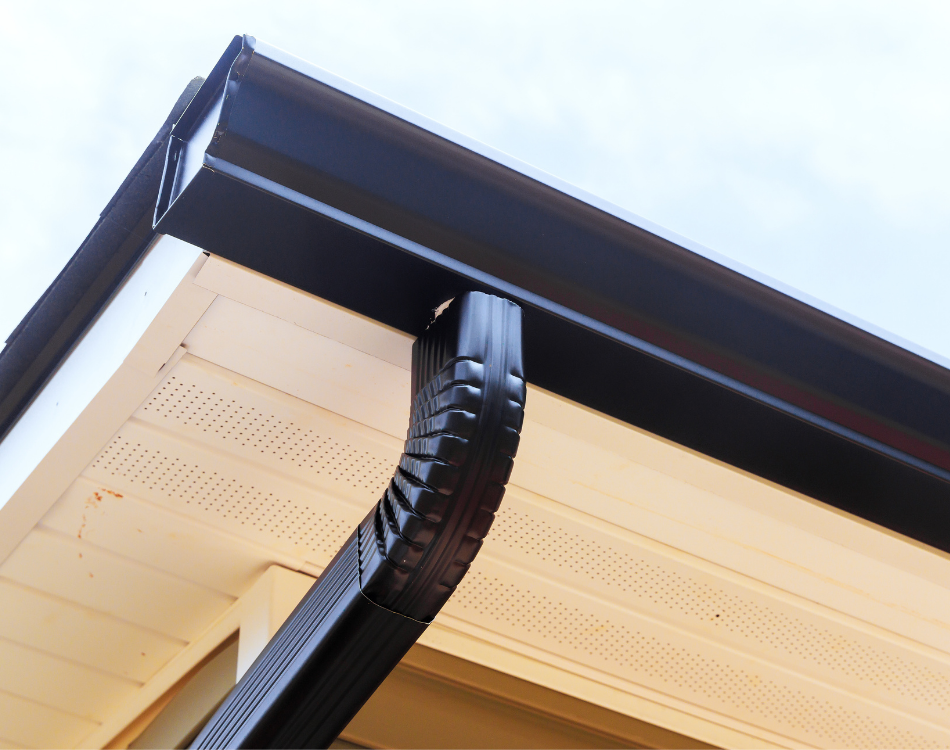
Seamless gutters are cut from a single continuous piece of aluminum to match the exact length of each run on your roofline. There are no mid-run seams to collect debris or fail under pressure. The only joints are at the corners and downspout connections, which are far easier to seal and maintain. For a Locust Grove home dealing with spring pollen loads and heavy convective rain events, the difference in performance is noticeable. Our gutter installation in Locust Grove uses seamless aluminum profiles custom-fabricated on-site to fit each roofline precisely.

Gutter sizing also matters more than most homeowners realize. Standard 5-inch K-style gutters are common and work fine for average roof pitches and moderate rain events. But if you have a steep pitch or a large roof plane that drains into a single run, 6-inch gutters move significantly more water per minute. Given that Henry County storms can drop rain at rates that exceed what standard gutters were originally designed to handle, upsizing is often worth the modest additional cost during a replacement or new installation.
What This Means for Your Locust Grove Home
When gutters overflow on a consistent basis, the problems compound over time. The most immediate concern is your fascia board, which is the trim piece running along the roofline directly behind the gutter. Fascia is almost always wood, even on newer homes, and it absorbs water readily once it’s exposed to persistent overflow. Once the fascia starts to rot, the gutter literally loses its anchor and begins to pull away from the house. We’ve seen full gutter sections detach from homes in the Heron Bay area after just two or three seasons of unaddressed overflow.
Foundation issues are the longer-term concern. Gutters exist specifically to move water away from your foundation. When they’re clogged and overflowing near the house, you’re depositing large volumes of water exactly where you don’t want it. In Locust Grove’s clay-heavy soil, that water doesn’t drain away quickly. It saturates the soil near the foundation, creates hydrostatic pressure, and over several years can contribute to foundation movement and cracking. Fixing a foundation is orders of magnitude more expensive than replacing a set of gutters, so the economics here are pretty clear.
There’s also the roof connection. When gutters overflow and back up, standing water can push up under the shingles at the eave line during heavy rain events. That moisture works its way under the starter course and into the decking, which leads to rot and mold in places you can’t easily see. If you’ve been noticing any granule loss on your shingles or soft spots on your lower roof deck, it may actually be tracing back to gutter overflow rather than a roofing problem per se. Our team does free inspections that cover both the roof and the gutter system together, so you get the full picture. Check out our information on storm damage repair in Locust Grove if you suspect your roof deck has already taken some water intrusion damage this season.
What to Do About It
The good news is that most spring gutter problems in Locust Grove are very fixable, and the earlier you address them, the less expensive the solution. As a Locust Grove roofing company that handles both gutters and roofing together, here’s what we recommend for April specifically.
- Schedule a cleaning before the next major storm system. If it’s been more than six months since your gutters were cleared, do it now. Pollen paste combined with dry debris from winter is at its worst in early spring, right before the heaviest rains arrive. Getting ahead of that first big storm event is the highest-leverage thing you can do.
- Check your downspouts for blockages at ground level. Downspouts can get clogged at the elbow where they turn toward the ground. If water is backing up in the trough even after the trough itself is clean, that elbow is usually the culprit. A blocked downspout is worse than a clogged trough because it creates a full column of standing water with nowhere to drain.
- Look at where your downspouts discharge. The water needs to move away from your foundation, not pool against it. Splash blocks should direct water at least a foot away, and downspout extensions can push it even further if your grade doesn’t cooperate. On the Locust Grove side of Henry County, a lot of newer homes were built on relatively flat lots with clay soil, and drainage management matters more than most homeowners expect.
- Consider a gutter guard system if you’re replacing. If your gutters are old and already pulling away from the fascia, it may be more cost-effective to replace the full system with seamless gutters and add a guard that limits how much debris gets in during the next pollen season. We can walk you through what works and what doesn’t in the Georgia climate specifically.
If you’re not sure what condition your gutters are actually in, we offer free gutter and roof inspections. That gives you a clear picture without any cost or commitment. Our gutter resources have more information on common issues we see across the area. You can also contact us about storm damage repair if you suspect this spring’s rain events have already caused some damage to your roofline or fascia.
Why Crest
We’re a Locust Grove roofing company and gutter installer that’s been working in Henry County for over a decade. All of our gutter work uses seamless aluminum fabricated on-site for a precise fit. We don’t subcontract the work out. The same crew that shows up for your estimate is the one that does the installation. Our roofer in Locust Grove teams handle everything from a simple cleaning to a full seamless gutter replacement with downspout reconfiguration, and we back everything with a 10-year workmanship warranty.
We also do roof inspections at the same time if you want a full picture of your home’s exterior drainage from roof slope to downspout discharge. If your shingle roofing shows signs of water intrusion at the eaves, we can connect those dots between the gutter overflow and any roof deck damage during the same visit. Check our shingle roofing installation in Locust Grove page for more on how we approach combined roof and gutter assessments. And for a broader look at everything we do in the area, the Crest Roofing and Gutters home page has a full rundown of our services and service area coverage.
Frequently Asked Questions About Gutter Installation in Locust Grove GA
How often should I clean my gutters in Locust Grove?
We recommend cleaning gutters at least twice a year in Middle Georgia, once in late spring after pollen season and once in late fall after the leaves have dropped. If you have a lot of pine trees nearby, you may need a third cleaning in early spring as pollen starts to build up heavily.
What size gutters do I need for my Locust Grove home?
Most homes do well with 5-inch K-style seamless gutters, but homes with steep roof pitches or large roof planes draining into a single run often benefit from 6-inch gutters. We assess your specific roof configuration during a free inspection and recommend the right sizing for your actual runoff load.
Are seamless gutters worth the extra cost over sectional gutters?
For most homeowners in Locust Grove, yes. Seamless gutters eliminate mid-run seam failures, which are the most common source of gutter leaks on sectional systems. The cost difference is modest, and the reduction in maintenance calls and leak-related repairs typically pays for itself within a few years.
Can clogged gutters actually damage my roof?
Yes. When gutters overflow and water backs up under the eave shingles, it can cause moisture damage to the roof deck and starter course. This is most common on lower-slope sections of the roof. Addressing gutter problems proactively is one of the simplest ways to extend the life of your roofing system.
How long does a seamless gutter installation take?
For most Locust Grove homes, a full seamless gutter replacement takes one day or less. We fabricate the gutters on-site to fit your exact roofline measurements, so there’s no wait for custom parts. Most installations are complete by early afternoon.
Serving Locust Grove and Surrounding Henry County
Crest Roofing and Gutters serves Locust Grove and the surrounding communities throughout Henry County and beyond. Whether you’re in the Heron Bay subdivision, near Tanger Outlets off I-75 exit 212, or further out on Highway 42 toward the rural edges of the county, we provide the same on-site fabrication, same experienced crew, and same 10-year workmanship warranty on every job. We’re a local roofer in Locust Grove that understands how Middle Georgia’s spring weather patterns specifically affect your gutters and roofline.
If you’re ready to get your gutters sorted before the next big spring storm rolls through, give us a call at (478) 375-6175 or visit the Crest Roofing and Gutters contact page to schedule your free inspection today.
About the Author: Chad is the owner of Crest Roofing and Gutters, a licensed and insured Georgia roofing contractor based in Jackson, GA with 12 years of experience serving Butts, Henry, Spalding, and Lamar counties. Crest Roofing and Gutters is 5-star rated on Google and backs every project with a 10-year workmanship warranty. Free roof and gutter inspections are available throughout the service area.