
Summer afternoons around Locust Grove can flip from blue sky to a churning gray wall in under an hour. One minute you are watering the lawn off Bill Gardner Parkway, the next you are listening to ice rattle the windows. By the time the sky clears over Heron Bay and the rooftops near Tanger Outlets are steaming in the sun again, the storm has already done whatever it was going to do up there.
If you have owned the same Locust Grove house through a decade of these storms, you already know your roof takes a beating every June and July. What is less obvious is exactly how a hailstone the size of a quarter does its damage, and why a roof that still looks fine from the driveway can be quietly failing where you cannot see it. That gap between what looks fine and what actually happened is where a lot of long-term homeowners get caught.
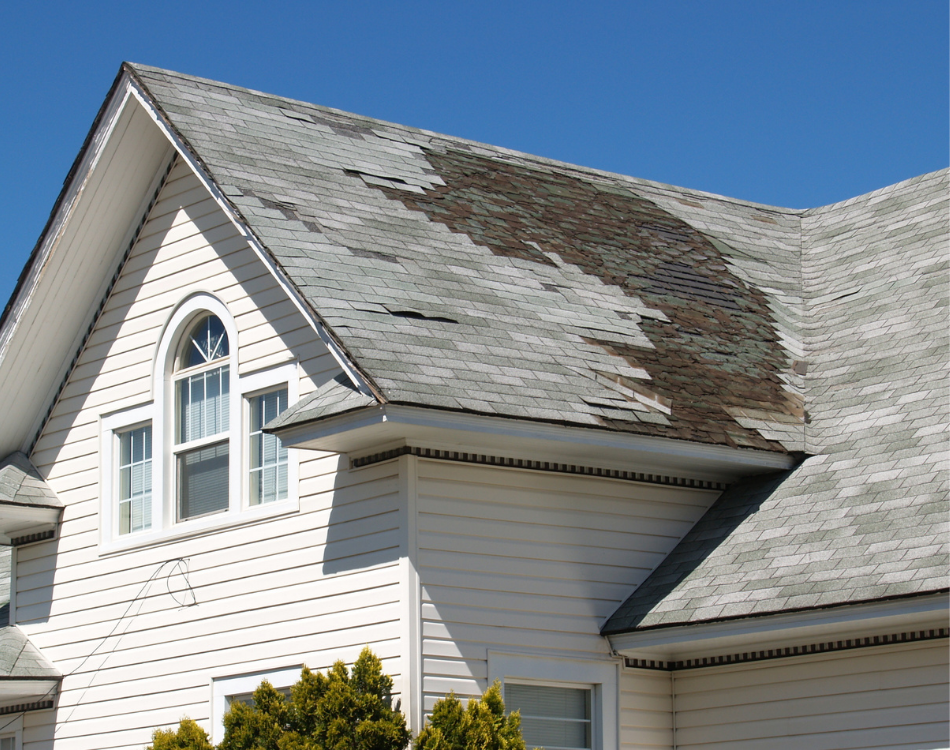
What hail actually does up there
An asphalt shingle is not a single solid sheet. It is a fiberglass mat soaked in asphalt, with a thick layer of ceramic granules pressed into the top to shield that asphalt from the sun. Those granules are the sunscreen. When a hailstone hits, the impact knocks granules loose and bruises the soft asphalt underneath, sometimes fracturing the mat itself. You end up with a small dented spot where the protective layer is gone and the raw asphalt is now exposed to ultraviolet light it was never meant to face directly.
That bruise does not leak the next day. It leaks two or three summers later, after the exposed asphalt has dried out, cracked, and finally let water reach the mat. This delayed failure is the single most misunderstood thing about hail, and it is why the National Weather Service Storm Prediction Center tracks severe hail events so closely across the Southeast. You can read how often Georgia lands in the severe-weather outlook on the NOAA Storm Prediction Center maps, and Henry County shows up more than people expect.
Hail is only part of the story. The straight-line winds that arrive with these storms drive rain sideways, pushing it up and under shingle edges that shed water just fine when it falls straight down. And the daily heat cycle in Middle Georgia, where a dark roof can swing from a humid morning to a 150-degree afternoon surface and back, makes shingles expand and contract a little every single day. Over years, that thermal cycling works nails loose and opens hairline cracks. A hailstorm just finds the weak spots that heat has already created.
How storm damage repair responds differently than a reroof
The instinct after a bad storm is to assume you need a whole new roof. Sometimes you do. Often you do not, and a long-term homeowner who already understands roof basics is exactly the person who can make that call intelligently with the right information in front of them. Targeted storm damage repair in Locust Grove is about finding the specific compromised areas, the bruised field shingles, the lifted ridge caps, the dinged flashing around a chimney, and addressing those before they turn into deck rot.

The hard part is telling cosmetic damage from functional damage, and that is genuinely a trained eye. A roofer presses a thumb into a suspected hail hit to feel whether the mat gives like a bruise on an apple. We chalk the slopes, count strikes per test square, and check the soft metal of vents and gutters, because dents in soft metal confirm hail size even when the shingles hide their bruises. As a Locust Grove roofing company that has walked a lot of these roofs, we would rather tell you a roof has ten good years left than sell you a replacement it does not need. If the damage is widespread, full storm damage repair and roof replacement may be the better long-term value, and a thorough inspection is what tells the difference.
What this means for your Locust Grove home
Locust Grove leans toward newer single-family construction on larger lots, a lot of it built in the 2000s and 2010s out toward the rural edges off Highway 42 and near I-75 exit 212. If that describes your place, your original builder-grade shingles are now somewhere between fifteen and twenty-five years old, right in the window where accumulated hail bruising and heat aging start to compound. A roof in that age range does not have the granule reserve a new roof has, so each storm costs it more.
For a homeowner thinking past this one storm, the smart move is to know your roof’s real condition before you need it in an emergency. That changes the repair-versus-replace conversation from a panicked one into a planned one. It also matters for insurance, because Georgia policies generally have a window after a storm to file a hail claim, and documented damage from a roofer carries more weight with an adjuster than a homeowner’s guess. Knowing whether this is the storm that finally tips your roof into replacement lets you budget rather than scramble.
It is also worth thinking about what you replace with when that day comes. Plenty of long-term residents who have patched hail damage one too many times upgrade to metal roofing in Locust Grove, which shrugs off hail and wind far better than asphalt and tends to outlast it by decades. And since wind-driven rain so often overwhelms an undersized drainage system, pairing roof work with proper seamless gutters in Locust Grove keeps the next storm’s water away from your fascia and foundation instead of pouring over the edge.
What to do after a Locust Grove hailstorm
You do not need to climb up there yourself. A long-term homeowner can do plenty of useful assessment from the ground and the attic before a roofer Locust Grove GA residents trust ever arrives. Here is the short list:
- Walk the perimeter and look at soft metal first. Dents in gutters, downspouts, and metal vent caps are the easiest proof that hail was big enough to matter.
- Check the ground for granules. A pile of sandy grit at the bottom of a downspout after a storm means your shingles shed their protective layer.
- Go up into the attic with a flashlight on the next sunny day and look for pinholes of daylight or fresh water staining on the decking.
- Photograph everything with a date stamp, including the storm itself if you can, so your insurance file starts the moment the damage happens.
- Call for a professional inspection before the claim window closes, even if the roof looks fine from the yard.
If you find anything, or even if you are just not sure, a documented inspection from a local storm damage specialist protects you either way. A clean report is peace of mind. A report that finds bruising is the start of a valid claim while the timing still works in your favor.
Why Crest Roofing and Gutters
We are based right up the road in Jackson and have spent twelve years reading Middle Georgia roofs through exactly these summer storm seasons. We know what Henry County hail does to a fifteen-year-old asphalt roof because we repair it every year. Our inspections are free, we document everything for your insurance file, and we stand behind our work with a ten-year workmanship warranty. We would honestly rather earn your trust with a straight answer than push a job you do not need.
You can see the kind of seasonal storm work we handle across our Georgia weather and roofing guides, and when you are ready for eyes on your roof, we are a short drive away.
Frequently Asked Questions About Storm Damage Repair in Locust Grove GA
How soon after a hailstorm should I get my roof inspected?
As soon as the weather clears and ideally within a few weeks. Georgia insurance policies generally limit how long you have to file a hail claim, and a documented inspection early in that window protects your options even if the roof looks undamaged from the ground.
Can hail damage really be invisible from the ground?
Yes. Hail bruising knocks granules loose and fractures the shingle mat without an obvious hole, so the damage often looks like minor wear until it leaks two or three summers later. That is why a close, on-roof inspection matters after any significant storm.
Does every hailstorm mean I need a new roof?
No. Many storms cause spot damage that targeted storm damage repair can handle, and a good roofer will tell you when a repair beats a replacement. Full replacement only makes sense when bruising is widespread or the roof was already near the end of its life.
Will my homeowners insurance cover hail damage in Locust Grove?
Most Georgia homeowners policies cover sudden storm and hail damage, though coverage depends on your specific policy and deductible. Documented photos and a professional inspection report from a local roofer give your claim the best chance of a fair outcome.
Is metal roofing worth it if I keep getting hail?
For many long-term residents, yes. Metal resists hail and wind far better than asphalt and lasts decades longer, so homeowners tired of repeat repairs often find it pays off over time. A Locust Grove roofing company can walk you through the cost difference for your specific home.
Serving Locust Grove and Surrounding Henry County
From the subdivisions off Bill Gardner Parkway to the rural lots near Highway 42 and the commercial stretch by Tanger Outlets, we cover all of Locust Grove and the wider Henry County area, along with Butts, Spalding, and Lamar counties. If a summer storm rolled through your neighborhood, we can be on your roof quickly.
If hail or wind hit your home this season, do not wait for the leak to show up inside. Call us at (478) 375-6175 for a free inspection, or reach out through our home page and we will get you on the schedule.
Chad founded Crest Roofing and Gutters and brings twelve years of roofing experience to every Middle Georgia home he inspects. A licensed and insured Georgia roofing contractor based in Jackson GA, Chad and his crew back their work with a ten-year workmanship warranty and offer free roof and gutter inspections across Henry, Butts, Spalding, and Lamar counties.