
May in Middle Georgia means one thing: thunderstorm season is here. If you live along Highway 36, out near Jackson Lake, or in one of the newer subdivisions south of downtown, you have probably already noticed the sky turning dark in the afternoon and the rain coming down hard. We are talking about the kind of downpours that drop an inch of rain in twenty minutes and leave water sheeting off every surface on your home.
This is exactly the time of year when your gutters either earn their keep or become a serious problem. If you have old sectional gutters with sagging joints or loose hangers, those afternoon storms are not just an inconvenience. They are actively directing water toward your fascia, your foundation, and your landscaping in ways that cause real damage. As a Jackson roofing company, we see this every single spring: homeowners calling us in June about water in their crawl space or rot showing up on their wood trim, and when we look at the gutters, it is clear that has been the culprit all along.
The good news is that seamless gutters are one of the most cost-effective upgrades you can make to protect your home before the heavy rain season really gets rolling.

What Thunderstorm Season Actually Does to Your Gutters
Middle Georgia sits in one of the most active thunderstorm corridors in the southeastern United States. From May through September, the combination of Gulf moisture, daytime heating, and afternoon instability produces frequent heavy rain events that can overwhelm gutters that are not performing at full capacity. According to the NOAA Storm Prediction Center, the Southeast sees some of the highest rates of significant convective events in the country during this window, and Butts County is squarely in that zone.
When a storm drops a heavy downpour on your roof, all that water funnels toward your gutters fast. If the gutters are partially clogged with debris from the spring pollen season, or if the joints on sectional gutters have separated over winter, the water has nowhere to go. It spills over the front edge, runs down the side of the house, and pools at the foundation. It also backs up under the shingles near the eave, which can eventually work its way into your attic. None of that is visible right away, but the damage adds up quickly through a long summer of storm after storm.
We have seen homes near Jackson Lake Road where overflowing gutters quietly eroded the soil along the foundation for two full storm seasons before the homeowner noticed water in the crawl space. By that point, the repair costs had grown well beyond what a gutter replacement would have run. Getting ahead of the problem in May is almost always the smarter financial move.
How Seamless Gutters Handle Heavy Rain Differently
The difference between sectional gutters and seamless gutters comes down to one thing: joints. Standard sectional gutters are pieced together in 10- to 12-foot sections, and each joint is a potential failure point. Over time, the sealant breaks down, the metal shifts with temperature changes, and you end up with small gaps that let water leak through. In a heavy rain, those small gaps become real problems.
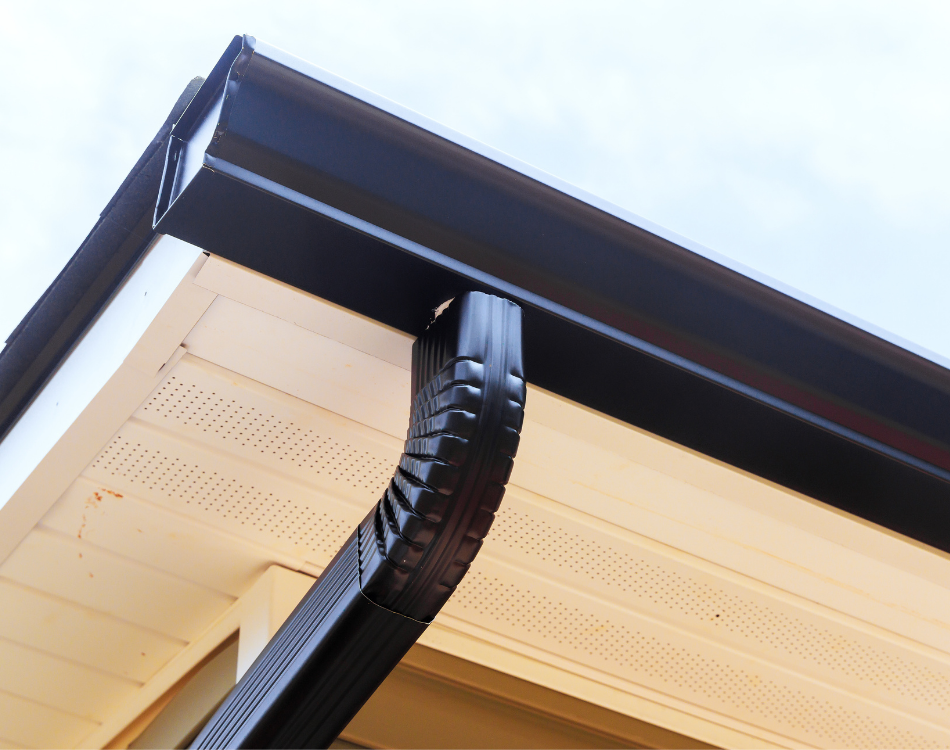
Seamless gutters are roll-formed on site from a single continuous piece of aluminum, cut to the exact length of your roofline. There are no mid-run joints, which means there are no mid-run leaks. The only connections are at the corners and the downspout outlets, and those are properly sealed during installation. For homeowners in Jackson who deal with summer storms that can drop serious rainfall totals in a short window, that distinction matters a lot.
Our gutter installation in Jackson includes properly sized downspouts positioned to move water away from your foundation, with extensions that direct runoff well clear of the house. We also pitch the gutter run so water flows toward the outlet rather than pooling in the middle and eventually pulling the hanger loose from the fascia board. Proper pitch sounds like a small detail, but it is one of the most common installation shortcuts we fix when we are replacing gutters that were done by someone who was just focused on getting in and out fast.
What This Means for Your Jackson Home Specifically
Jackson sits in Butts County, and the housing mix here ranges from older homes near the downtown square (some of them well over 50 years old) to newer construction along Highway 36 toward I-75. Older homes tend to have original sectional gutters that are long past their useful life. Newer homes sometimes have builder-grade gutters that look fine initially but were installed with too few hangers or improper pitch, meaning they start sagging and pooling within a few years.
Either way, the thunderstorm season stress-tests everything. We have seen homes in subdivisions off Highway 42 where water from overflowing gutters has rotted the fascia boards completely through, meaning a straightforward gutter replacement job turned into a fascia repair job as well. Catching the gutter problem before the summer rains is always the smarter move financially. If your gutters are more than 15 years old or if you notice water staining on the siding below the gutter line, it is worth getting an inspection before the heavy storms roll in.
A quick visual check after a heavy rain tells you a lot. Look for water spilling over the front edge of the gutter, pooling at the base of your downspouts in a way that looks like it is coming from above rather than out of the outlet, or gutters that are visibly pulling away from the fascia. Any of those signs mean it is time to call a local roofer in Jackson before the next storm rolls through.

What to Do About It
If you are heading into thunderstorm season with gutters you are not confident about, here is where to start. Our team offers free inspections across all of Butts County and the surrounding area, so there is no cost to getting a professional set of eyes on the situation before you commit to anything. We can usually schedule Jackson-area homes quickly this time of year.
- Schedule a free gutter inspection. We check for sagging, joint separation, improper pitch, clogging at the outlets, and any damage to the fascia behind the gutter. This takes about 20 to 30 minutes and gives you a clear picture of what you are working with before the storm season gets serious.
- Get the downspouts checked too. A clogged or undersized downspout is often the hidden culprit behind overflowing gutters. More water volume from bigger storms means your downspout capacity matters more than ever, and the outlets are one of the first places debris accumulates.
- Ask about gutter guards. If debris buildup is a repeat problem, adding a quality leaf guard to a new seamless system can significantly cut down on your annual maintenance. We can walk you through options that make sense for the tree coverage around your specific property.
- Do not wait until damage is visible. Water damage from failed gutters often hides inside walls and under flooring for months before it becomes obvious. Acting now is almost always cheaper than acting after something goes wrong inside the structure.
For anything storm-related that has already caused damage to your roof or fascia, our storm damage repair service in Jackson covers those repairs as well. If you are also thinking about your shingle roof, visit our shingle roofing installation page for Jackson to see what we do on the roof itself and how it pairs with a new gutter system.
Why Crest Roofing and Gutters Is the Right Call for Jackson Homeowners
We have been working in Butts County for over a decade. We are not a company that comes in from out of state after a major storm and disappears six months later. Our shop is right here in Jackson, and we stand behind every job we do with a 10-year workmanship warranty. When we install seamless gutters on your home, we treat it the way we would treat our own.
As a local Jackson roofing company, we also understand the specific drainage challenges that homes here face. The clay soil here does not absorb runoff quickly. Some of the older neighborhoods near the square have grade issues that funnel water toward structures. And the tree coverage loads gutters with debris fast after any significant storm. All of that shapes how we approach an install. We are not following a one-size-fits-all template. We are looking at your home and figuring out the right solution. See the full range of what we offer through our seamless gutter installation service page, and browse related tips and project updates in our gutters blog archive.
Frequently Asked Questions About Seamless Gutters in Jackson GA
How long do seamless gutters last in Middle Georgia’s climate?
Quality aluminum seamless gutters typically last 20 years or more with basic maintenance. The humid summers and occasional freeze events in Middle Georgia are not unusually hard on aluminum, so a well-installed system should give you many years of reliable service before replacement becomes necessary.
What size gutters do I need for a Jackson GA home?
Most residential homes in Jackson do well with 5-inch K-style gutters and 3×4-inch downspouts. Homes with steeper roof pitches or large roof sections draining to a single gutter run may need 6-inch gutters. We size every system based on your actual roof area and local rainfall intensity during peak storm events.
Can seamless gutters handle the heavy downpours that hit Butts County in May and June?
Yes, and that is one of their primary advantages over sectional gutters. A properly sized and pitched seamless system moves water quickly and efficiently even during intense downpours. No mid-run joints means no weak points for water to bypass when the volume spikes during a heavy thunderstorm.
Do I need gutters on every side of my house?
Not necessarily. Gutter placement depends on your roof design, eave configuration, and where water runoff is most likely to cause problems. We evaluate each roofline individually and recommend coverage where it will actually make a difference, rather than adding gutters to sides where they provide little benefit.
Is there a best time of year to install gutters in Georgia?
We install gutters year-round, but getting ahead of the May-to-September thunderstorm season is ideal. Spring is popular because homeowners want full coverage before the heaviest rain months arrive. We are typically able to schedule Jackson-area jobs within a week or two, even during our busier spring season.
Serving Jackson and All of Butts County
We cover all of Butts County and the surrounding area, including homes along Highway 36, near I-75 exits 188 and 201, throughout the Indian Springs and Jackson Lake corridors, and out toward the rural edges of the county. If you are not sure whether we reach your area, give us a call at (478) 375-6175 or visit Crest Roofing and Gutters online. Free gutter inspections are available with no pressure to commit before you have a clear picture of what your home needs going into this storm season.
About the author: Chad has been in the roofing and gutters industry for 12 years. As a licensed and insured Georgia contractor, he leads the Crest Roofing and Gutters team out of Jackson GA, proudly serving Butts, Henry, Spalding, and Lamar counties. Every job we complete comes with a 10-year workmanship warranty, and we offer free roof and gutter inspections to homeowners throughout our service area.